Quite a substantial amount of UK glass packaging is manufactured in Continental Europe. Since the end of the Brexit transition period in January 2021, importing that glass has become more complex, more expensive, and less predictable than it was. In 2026, UK buyers face a combination of customs friction, currency exposure, rising packaging compliance costs, and the ongoing question of how carbon border pricing will eventually affect their supply chain. This article sets out what has actually changed, what the numbers look like, and what procurement teams can do to reduce their exposure.
What the UK-EU Trade Relationship Looks Like for Glass Buyers in 2026
The UK-EU Trade and Cooperation Agreement (TCA), which came into force on 1 January 2021, introduced a substantial administrative burden of cross-border trade. Every shipment of European glass entering the UK now requires a customs declaration, proof of origin documentation, and since 31 January 2025 an entry summary declaration under the UK’s Safety and Security regime.
For glass packaging, which is heavy, fragile, and typically shipped in large pallet quantities, that burden translates directly into cost and time. Academic modelling by the UK Trade Policy Observatory at the University of Sussex found that the new UK-EU customs border adds quantifiable costs to every import transaction: customs agent fees, staff time on documentation, and delays when shipments are held for inspection. Glass and ceramics are among the sectors where TCA-related trade declines have been sharper than average – border delays are more costly for heavy, fragile goods than for lighter materials.
Total UK import volumes from the EU are running approximately 23 per cent below their no-Brexit trajectory, based on economic modelling of trade flows since 2021. For glass packaging buyers, that gap reflects a real shift toward alternative sourcing arrangements, including greater reliance on UK-held stock from distributors with established European supply relationships.
The Real Cost of Customs for UK Glass Buyers
Customs costs fall into two categories: direct and indirect.
Direct costs include customs agent fees (typically £30 to £75 per entry, plus surcharges for complex declarations), import duty where applicable, and compliance costs for rules of origin documentation. Under the TCA, EU-manufactured glass qualifies for zero tariff, but only if origin requirements are met. Goods that do not qualify face the standard UK Global Tariff rate.
Indirect costs include management time on documentation, the cost of using customs intermediaries, and the buffer stock buyers now need to hold because cross-border lead times are less predictable than domestic supply.
From 31 January 2025, mandatory entry summary declarations (ENS) added a pre-arrival filing requirement to every EU import. The UK government has since simplified some data fields, but the requirement stands and companies without established customs processes need one.
At Pattesons, we handle this documentation for every European shipment we bring into the UK. When clients buy from our UK stock, the declaration, agent fees, and compliance administration stay on our side of the transaction, not theirs.
Lead Times in 2026
For bulk and pallet shipments from European manufacturers, the door-to-door lead time in 2026 runs to five to ten working days for transit, plus one to three working days for UK customs clearance. A standard pallet order placed on a Monday realistically arrives cleared ten to fifteen working days later assuming documentation is correct and no inspection delay occurs.
From early 2026, the UK moved to a fully digital customs environment. Any documentation mismatch now results in an immediate shipment block rather than a minor delay and buyers without a reliable customs agent are more exposed than they were twelve months ago.
Two further factors are adding pressure in 2026. UK haulier numbers fell approximately 4 per cent year-on-year at the end of 2025, making road freight windows less predictable. High-demand formats, particularly 500ml bottles and amber glass, both of which saw strong demand growth in 2025, – are facing production slot pressure at European furnaces. Buyers ordering these formats without forward commitments are seeing longer lead times than for standard commodity formats.
The result is a clear shift in procurement behaviour: away from reactive, price-led decisions and toward what supply chain analysts are calling risk-led sourcing – choosing suppliers who can guarantee a lead time rather than those with the lowest unit price.
We have seen this directly with clients who previously sourced from European manufacturers. The tipping point was rarely one bad experience; it was the accumulation of planning overhead: longer order horizons, buffer stock requirements, and the occasions when a documentation issue pushed a delivery past a production deadline. For many, switching to UK-held stock removed a category of operational risk they had stopped thinking of as optional.
Energy Costs and Carbon Pricing: The Pressure Already Hitting European Glass Manufacturers
Glass manufacturing is energy-intensive. Container glass furnaces run continuously at above 1,500°C, and energy can represent up to a third of total manufacturing costs for European producers. That makes UK glass buyers directly exposed to energy price shocks and 2026 has produced a significant one.
The Iran conflict, which began in early March 2026, triggered the effective closure of the Strait of Hormuz through which approximately 20 per cent of global seaborne crude oil and LNG normally passes. The International Energy Agency described it as the largest supply disruption in the history of the global oil market. As a result the energy prices are well above pre-conflict levels. Chemical and steel manufacturers, facing comparable energy intensity to glass producers, have already imposed surcharges of up to 30 per cent to offset higher electricity and feedstock costs.
UK buyers should expect the energy cost impact to be visible in European manufacturer pricing before the year is out. European road fuel costs also rose approximately 20 per cent during the peak of the conflict, adding a freight surcharge on top of the customs costs described above.
Beyond the immediate energy shock, EU glass manufacturers operate under the EU Emissions Trading System (EU ETS), which applies a carbon price to emissions above a free allowance. As that allowance reduces under the EU’s Fit for 55 framework, the structural carbon cost in European glass production will increase and pass through to UK buyers.
On the UK side, the UK Carbon Border Adjustment Mechanism (UK CBAM) takes effect from 1 January 2027. Following consultation, glass and ceramics were removed from the initial scope which covers aluminium, cement, fertiliser, hydrogen, iron, and steel. The legislation is designed to be extended and glass remains a candidate for a future phase. If brought into scope, it would add a further carbon-related cost to imported European glass.
Through our PAE European supply network, we monitor manufacturer cost structures and pricing signals across the European glass market. When energy or carbon costs shift in a way that is likely to affect UK buyers, we tell clients before it appears on an invoice.
UK Domestic Stock: The Practical Alternative
UK manufacturing capacity for glass containers does not meet total UK demand – specialist formats, colours, and high-volume commodity orders still depend on European supply.
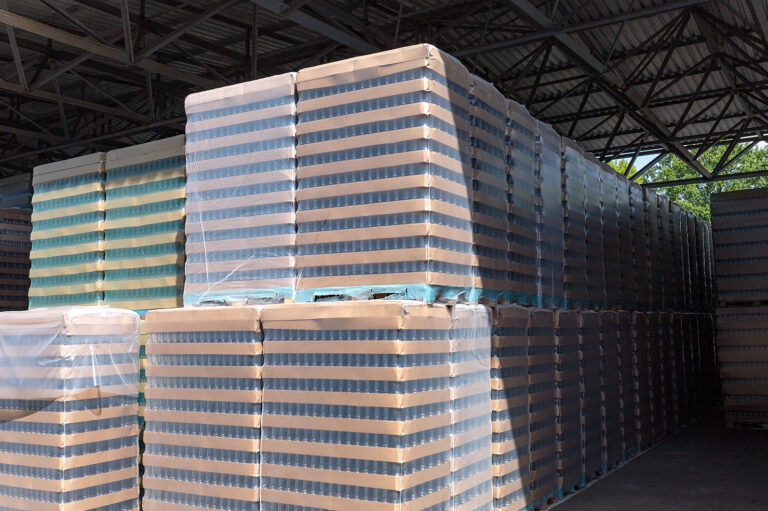
What has grown since 2021 is the strategic value of UK-held stock. Distributors with substantial UK warehousing (Pattesons Glass operates a 7,200-pallet warehouse at its Humberston site) can offer buyers:
- Delivery within days rather than weeks, with no customs documentation at the buyer’s end
- Sterling pricing with no GBP/EUR exposure
- No minimum order quantities tied to container load economics
- Consistent availability without the lead time variability of direct European supply
For food manufacturers, artisan drinks brands, and specialty condiment producers, UK-held stock has shifted from a convenience option to a core procurement strategy. The cost of holding buffer stock to cover unpredictable European lead times often exceeds the marginal premium of UK-stocked glass.
If you are reviewing your glass packaging supply strategy, the Jars & Bottles range includes a broad selection of UK-held glass jars and bottles available for despatch in short lead times.
The Compliance Cost Of Extended Producer Responsibility
UK glass buyers also face a domestic cost that has been building since 2025: Extended Producer Responsibility for packaging (EPR). From October 2025, producers began receiving invoices under the scheme, which transfers approximately £1.5 billion per year in household packaging waste management costs from local authorities to producers.
EPR fees are calculated by weight, which structurally disadvantages glass relative to lighter materials. Glass containers attract disproportionately higher fees per unit than plastic or aluminium equivalents. The Government’s illustrative fee projections show glass EPR base fees increasing by approximately 28 per cent from 2025 to 2026 levels as the scheme moves toward full cost recovery.
EPR fees are now a packaging cost line item that did not exist two years ago and one that will increase further as the scheme matures. We have published a detailed guide to managing EPR costs for glass packaging on the Pattesons website, covering how to calculate fee liability and reduce it. The weight-based fee structure disadvantages glass unfairly relative to less recyclable materials, and we have been making that case to industry bodies on behalf of our clients.
Scenario Planning: What UK Glass Buyers Should Be Preparing For
The UK-EU trade relationship for glass packaging is not going to simplify. Buyers planning on the assumption that current conditions are stable are carrying hidden risk. Three scenarios are worth preparing for.
Scenario 1: Tariff changes. The TCA is subject to ongoing review. Any renegotiation introducing tariffs on glass imports would add directly to landed costs. A 5 per cent tariff (not a current proposal, but within the range of plausible outcomes) would add meaningful cost to every container of imported glass.
Scenario 2: CBAM extension to glass. If the UK CBAM is extended to cover glass and ceramics, importers will need to calculate and report the embedded carbon cost of their packaging and pay a corresponding charge. The administrative requirement alone would be significant for buyers who currently do no carbon accounting.
Scenario 3: Shipping and energy disruption. The 2026 Iran conflict has demonstrated how rapidly an energy price shock can add cost to European manufacturing and road freight simultaneously. European gas prices rose nearly 75 per cent at peak, and freight surcharges followed within weeks. An expansion of this conflict would compound every pressure described in this article.
The hedging strategy against all three scenarios is the same: increase UK-held stock as a proportion of total glass purchasing, build relationships with distributors who can absorb supply shocks, and avoid single-source dependency on direct European supply.
This is the position Pattesons is built for. Our 7,200-pallet UK warehouse exists to give clients a buffer against exactly these scenarios. We hold stock so that our clients do not have to plan around the possibility of European supply failing them at short notice.
FAQ
How has Brexit affected glass packaging costs in the UK?
Brexit introduced customs declarations, rules of origin requirements, and Safety and Security entry filings for all glass imported from the EU. These add direct costs – agent fees, staff time, and compliance administration — and increase lead time variability. Economic modelling suggests UK-EU trade volumes are running approximately 23 per cent below their no-Brexit trajectory, with glass and ceramics experiencing sharper trade declines than average.
What is CBAM and how does it affect glass imports to the UK?
The UK Carbon Border Adjustment Mechanism (UK CBAM) applies a carbon price to imports of certain carbon-intensive goods from January 2027. Glass and ceramics were removed from the initial scope following consultation, but could be added in a later phase. Separately, EU glass manufacturers pay carbon costs under the EU Emissions Trading System, which affects their production costs and the prices UK buyers pay.
How long does it take to import glass from Europe to the UK?
For bulk and pallet shipments in 2026, transit from a European manufacturer typically takes five to ten working days, plus one to three working days for UK customs clearance. The realistic door-to-door window is ten to fifteen working days. From early 2026, the UK operates a fully digital customs environment, meaning documentation errors now cause immediate shipment blocks. For buyers sourcing from a UK distributor with in-country stock, delivery is typically a matter of days with no customs administration required.
Is it cheaper to buy glass packaging from a UK distributor than to import directly from Europe?
On headline unit price, direct European import may appear cheaper for high-volume orders. When total landed cost is calculated – customs agent fees, documentation time, buffer stock requirements, and supply disruption risk – UK-held stock from a distributor is frequently competitive and often cheaper overall.
How can UK manufacturers protect against glass packaging supply disruption?
Increase the proportion of glass sourced from UK-held stock, establish a relationship with a UK distributor who can fulfil orders at short notice, avoid single-source dependency on direct European supply, and build a buffer stock position covering at least six to eight weeks of production. Where UK-held alternatives exist for your specification, switching from direct import removes customs lead time variability entirely.
About the Author
Sam Graves is Marketing Manager at Pattesons Glass, a UK glass packaging distributor established in 2007 and a member of PAE (Packaging Alliance Europe). Pattesons operates a BRCGS AA+ certified warehouse in N.E Lincolnshire and supplies glass packaging to food, drink, and cosmetics producers across the UK. Sam works directly with clients on procurement planning, supplier transitions, and compliance requirements and has supported hundreds of UK producers with glass packaging supply strategy.
Sources
- UK-EU trade: new customs rules — House of Commons Library
- UK Carbon Border Adjustment Mechanism: key design principles — UK Steel / UK Government
- UK CBAM: what importers must know before 2027 — Plutos
- Extended Producer Responsibility for Packaging: 2025 base fees — GOV.UK
- The impact of a new customs and regulatory border with the EU — UK Trade Policy Observatory, University of Sussex
- Why oil and gas prices could stay high in Europe even if the Iran war ends — Euronews
- 2026 Iran war fuel crisis — Wikipedia